

Does OEKO-TEX Matter for Baby Clothes
Table of Contents
- What OEKO-TEX Standard 100 Baby Clothes Actually Means
- Why Textile Certification Matters for Infant Skin
- Best Fabric for Sensitive Baby Skin
- OEKO-TEX vs. GOTS Baby Clothes: What's the Difference
- How to Verify OEKO-TEX Certification
- Is OEKO-TEX Worth the Cost?
- Frequently Asked Questions
Last Updated: October 11, 2026
What OEKO-TEX Standard 100 Baby Clothes Actually Means
Does oeko tex matter for baby clothes? The short answer is yes, but not in the way most parents think. OEKO-TEX Standard 100 certification means a textile has been tested for harmful substances and meets strict safety limits. It's a real standard backed by independent testing, not marketing hype. At TUMBLE TOES SHOP, we've built our product line around this certification.

The certification tests for over 300 harmful substances. These include heavy metals, formaldehyde, pesticide residues, and problematic dyes. A product that carries the label has passed rigorous lab testing at each stage of production. But here's what catches most parents off guard: the certification only covers the materials and chemical residues. It doesn't guarantee durability, comfort, or that your baby won't outgrow the clothes in three months.
The testing process behind the certification
Independent labs test raw materials, intermediate products, and finished textiles. The process is thorough and repeatable. Each batch must meet the same standards as the previous one. The testing organization publishes results, and manufacturers receive a certificate with a unique ID number. You can actually verify these certificates online using the certification number printed on the label.
The labs check for chemicals at every stage. Raw fibers get tested. Dyes and finishes get tested. The final garment gets tested. This multi-stage approach catches problems that single-point testing would miss. A fabric might start clean but pick up contamination during dyeing or finishing if the manufacturer doesn't follow proper protocols.
What gets tested and what doesn't
The standard tests for harmful chemical residues. It does not test for durability, comfort, or how well the garment will hold up after 20 washes. It doesn't guarantee the fabric won't pill, fade, or shrink. It doesn't promise the seams won't unravel. Those qualities depend on design, materials, and manufacturing skill, not chemical safety.
The certification also doesn't cover the entire supply chain. It tests the final product and the materials that go into it. But it doesn't necessarily verify that workers were treated fairly or that the factory meets environmental standards. That's where other certifications like GOTS come in.
Why Textile Certification Matters for Infant Skin
Babies' skin is thinner and more permeable than adult skin (Skin Physiology of the Neonate and Infant: Clinical Implications). It absorbs more of what touches it. Chemical residues from manufacturing, dyes, or finishes can irritate sensitive skin. For babies with eczema or known sensitivities, this matters significantly. A certified garment reduces the risk of introducing new irritants through clothing.
The difference becomes obvious when you switch a sensitive baby to certified clothing. Parents often notice fewer rashes, less scratching, and calmer sleep. This isn't placebo. Removing chemical irritants from direct skin contact produces measurable results. For newborns and infants under two years old, certified textiles provide meaningful protection during a critical window when their skin barrier is still developing.
Conventional manufacturing uses chemicals that serve real purposes. Dyes make colors stick. Finishing agents make fabric softer or more water-resistant. Pesticides protect crops from insects. But residues can remain in the final fabric unless the manufacturer takes specific steps to remove them. Certification ensures those steps happen consistently.
Best Fabric for Sensitive Baby Skin
Organic cotton is a good choice for sensitive baby skin. It grows without synthetic pesticides and is processed with fewer harsh chemicals than conventional cotton. When combined with OEKO-TEX certification, organic cotton becomes even safer because the finished garment has been independently tested.
Beyond fabric type, construction matters. Flat-seam stitching reduces friction against skin. Tagless labels eliminate irritation points. Loose weaves allow better air circulation and reduce sweat buildup. The convertible grip footies from TUMBLE TOES SHOP combine certified organic materials with thoughtful construction. The fold-over foot covers adapt as your baby grows, and the textured grip details provide traction without rough seams.
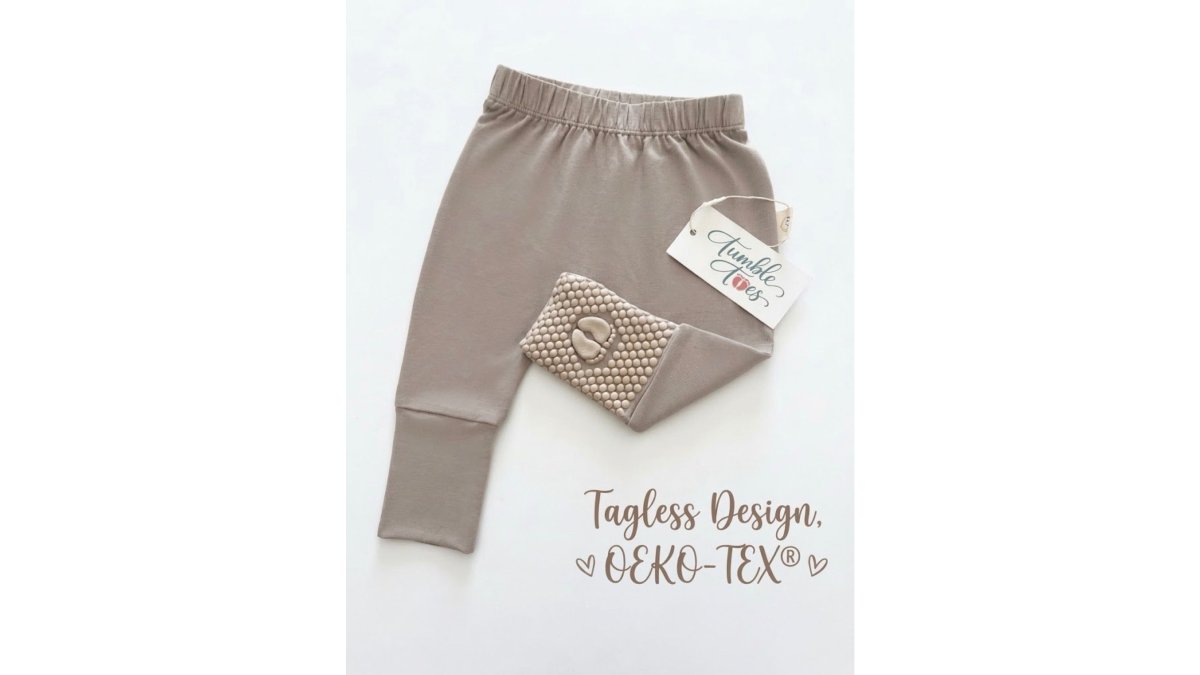
Natural fibers generally outperform synthetics for sensitive skin. Cotton, bamboo, and wool (when properly processed) all work well. Avoid polyester blends and heavily treated synthetics if your baby has known sensitivities. The certification helps, but starting with the right base material gives you the best foundation.
OEKO-TEX vs. GOTS Baby Clothes: What's the Difference
OEKO-TEX Standard 100 focuses on chemical safety in the finished product. GOTS (Global Organic Textile Standard) certifies the entire supply chain, from seed to finished garment. GOTS requires organic farming practices, worker protections, and environmental standards. OEKO-TEX only tests for harmful substances in the final textile.
For parents choosing between them, think about your priorities. If you want to know the garment is free from harmful chemical residues, OEKO-TEX Standard 100 delivers that. If you want assurance about organic materials, ethical production, and environmental responsibility throughout the supply chain, GOTS is more comprehensive. Many premium baby clothing brands pursue both certifications because they address different concerns.
OEKO-TEX certification is faster and less expensive to obtain. GOTS requires more documentation and ongoing audits. This explains why more brands carry OEKO-TEX alone. But neither certification is marketing fluff. Both require independent testing and verification. The choice depends on what matters most to your family.
| Certification | Focus | Tests | Supply Chain | Cost |
|---|---|---|---|---|
| OEKO-TEX Standard 100 | Chemical safety | Harmful substances | Final product only | Lower |
| GOTS | Organic + ethics | Chemicals + farming + labor | Seed to finished garment | Higher |
How to Verify OEKO-TEX Certification
Every certified garment carries a unique certificate number on its label. This number lets you verify the certification online at the OEKO-TEX database. Visit the official OEKO-TEX website, enter the certificate number, and confirm the product details match what you're holding. This takes 60 seconds and removes all doubt about whether the certification is real.
Understanding Certificate Scope
When you verify a certificate, pay attention to what is actually covered. The certificate lists specific product components, for example, "100% cotton jersey fabric" or "finished garment including all trims and labels." Some certificates cover only the base fabric, not the dyes, thread, elastic, or buttons. For baby clothes, you want the entire finished product tested, not just the main fabric. Check the certificate details to confirm the scope matches what you need.
Product Classes and Infant Requirements
OEKO-TEX Standard 100 uses product classes. Class I covers textiles for babies and young children (typically ages 0-3 years) (OEKO-TEX® STANDARD 100). Class I has stricter testing limits than other classes because infants have more permeable skin and spend more time in direct contact with clothing. When you verify a certificate, confirm it shows Class I if the garment is intended for a baby. A Class II or Class III certification on a baby garment is a red flag, it means the testing was done to a less stringent standard.
What to Check on the Label
Legitimate OEKO-TEX labels include:
- The unique certificate number (usually 12-14 digits)
- The product class (Class I for baby clothes)
- The name of the independent testing institute that performed the certification
- The year of certification
Fake labels exist. Scammers sometimes use similar-looking logos or vague language like "tested for harmful substances" without a verifiable certificate number. The certificate number is your proof. If you cannot find it on the label or it does not verify in the online database, the product is not certified.
If Verification Fails or Shows Gaps
If the certificate number does not match the product, or if the certificate shows limited scope (for example, only the fabric, not the finished garment), contact the brand directly. Ask for clarification on what was tested and why. Legitimate manufacturers are transparent about their certifications and can explain any gaps. If a brand claims OEKO-TEX certification but cannot provide a verifiable certificate number or the number does not match the product, that is a strong signal to choose a different brand.
Is OEKO-TEX Worth the Cost?
The convertible grip footies from TUMBLE TOES SHOP are priced at $32.99, which reflects the cost of certified materials and rigorous testing. Parents often ask whether the premium is justified.
The answer depends on your baby's skin and your risk tolerance. For babies with eczema, sensitive skin, or a family history of skin conditions, understanding does oeko tex matter for baby clothes provides real value. For babies with naturally resilient skin, conventional clothing might work fine.
Consider the garment lifespan too. Better construction means clothes last longer through multiple children or resale. The fold-over design on TUMBLE TOES SHOP footies adapts as your baby grows, extending the useful life. When you factor in durability, the per-wear cost becomes more reasonable.
Choosing safe clothing for your baby matters, and OEKO-TEX certification provides real assurance that harmful chemicals have been tested and controlled. The convertible grip footies from TUMBLE TOES SHOP combine OEKO-TEX Standard 100 certification with thoughtful design features like fold-over foot covers and textured grip details. These features work together to protect sensitive skin while simplifying your daily routine. Shop all products and discover why thousands of parents trust certified clothing for their little ones.
Frequently Asked Questions
What does OEKO-TEX Standard 100 mean for baby clothes?
OEKO-TEX Standard 100 certification means the textile materials have been tested for harmful substances like heavy metals, formaldehyde, and certain dyes. It confirms that the fabric meets strict safety limits for chemical residues. However, it does not certify that cotton is organic or that the entire supply chain followed ethical practices, only that the finished material is safe for skin contact.
Is OEKO-TEX certification the same as organic?
No. OEKO-TEX tests finished textiles for harmful substances, while organic certification tracks how the cotton was grown without synthetic pesticides or fertilizers. A piece of clothing can be OEKO-TEX certified but made from conventional cotton, or organic but not tested for chemical residues in finishing. Many parents choose both certifications for maximum assurance, but they measure different things.
How can I check whether baby clothes are OEKO-TEX certified?
Look for the OEKO-TEX Standard 100 label or certificate number on the product tag or listing. You can verify the certificate at oeko-tex.com using the certificate number. Check the product description carefully, some sellers claim certification without showing proof. Reputable brands like Tumble Toes Shop display certification clearly and link to verification details.
Is OEKO-TEX certification worth paying more for?
If your baby has sensitive skin, eczema, or a history of skin irritation, OEKO-TEX certification reduces exposure to chemical residues and dyes that can trigger reactions. For babies without skin sensitivity, the benefit is lower. Tumble Toes Shop Convertible Grip Footies are $32.99 and include OEKO-TEX certification plus durable construction that lasts through multiple children, making the per-wear cost reasonable over time.