

Baby Grip Socks Alternatives for Crawling: A Parent's Guide
Table of Contents
- Why Parents Look for Baby Grip Socks Alternatives for Crawling
- Barefoot Crawling Baby: The Benefits of Letting Little Feet Go Free
- Baby Grip Footies: A Convertible Alternative to Grip Socks
- Baby Knee Pads for Crawling: When They Help and When They Don't
- Baby Clothes for Crawling on Hardwood Floors: What to Look For
- Comparison Table: Grip Socks vs. Alternatives for Crawling
- Common Mistakes to Avoid When Choosing Crawling Clothes
- Conclusion
- Frequently Asked Questions
Last Updated: October 17, 2026
Why Parents Look for Baby Grip Socks Alternatives for Crawling
Most parents start searching for baby grip socks alternatives for crawling the moment they notice their baby sliding across the floor instead of pushing forward. That sliding is not a quirk. It is a sign that the surface and the footwear are working against each other.
Here at Tumble Toes Shop, we hear the same question from parents every week: is there something better than grip socks? The short answer is yes, and it is rarely a single product. It is a combination of the right surface, the right clothing, and the right amount of bare skin.
Crawling is a full-body skill. A baby needs friction under the hands, knees, and toes to push off, and needs enough freedom in the hips and ankles to coordinate the movement. Anything that reduces that friction, or restricts the joints, slows the process down.
Below, we break down the real alternatives to grip socks, from bare feet to convertible footies to knee pads, so you can match the solution to your baby's stage rather than guessing.
Barefoot Crawling Baby: The Benefits of Letting Little Feet Go Free
A barefoot crawling baby gets the best possible grip, because skin on a textured surface creates more traction than any fabric sole. Toes can spread, grip, and push off, which builds the foot muscles and arches that support walking later.
The American Academy of Pediatrics guidance on infant movement consistently points to unrestricted floor time as the foundation of gross motor development. That means bare feet on a safe, clean surface for at least part of every day.
The catch is the floor itself. Bare feet on cold hardwood or tile get uncomfortable fast, and bare knees on a hard surface get red and sore. So barefoot time works best on a rug, a play mat, or carpet, and it works best in short bursts rather than all day.
Baby Grip Footies: A Convertible Alternative to Grip Socks
Baby grip footies are a middle path: soft fabric that covers the foot, with textured grip on the sole, and often a fold-over cover that lets you switch between covered and open feet in seconds. That flexibility is the whole point.

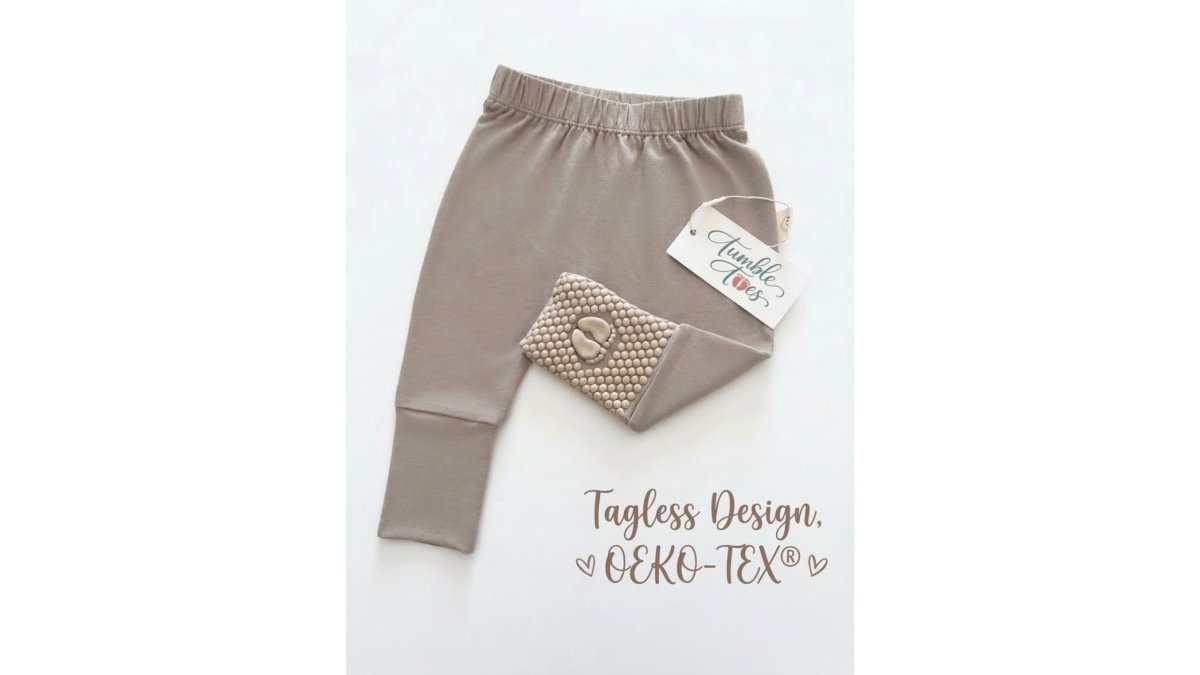
The alternative parents tend to overlook is the convertible design. Traditional grip socks have to come off entirely when you move from a slippery floor to a rug, and go back on when you return. A fold-over foot cover means you fold it down for grip on hard floors and fold it up for bare toes on carpet, with no outfit change and no lost sock.
This is exactly the problem our Convertible Grip Footies were built to solve. They combine a soft, comfortable fabric with textured grip on the fold-over covers, so little feet get traction when they need it and freedom when they don't. The materials carry OEKO-TEX® Standard 100 certification, which means the textiles have been tested for harmful substances, a detail that matters more than most parents realize when a baby spends hours a day in the same outfit.
One honest limitation: convertible footies are not a substitute for barefoot time. Think of them as the practical default for outings and cool floors, not a replacement for free toes on a safe rug.
Baby Knee Pads for Crawling: When They Help and When They Don't
Baby knee pads for crawling help in two specific situations: hard floors that leave knees red, and babies who are already mobile and covering a lot of ground each day. On carpet, or for a baby just learning to coordinate the motion, they usually add more bulk than benefit.
The trade-off is friction and fit. A knee pad that slips down becomes a distraction the baby stops to fix, and a pad that is too tight restricts the knee bend that crawling requires. Look for a thin, stretchy sleeve design rather than a bulky strap-on pad, and check that it stays put through a full crawl across the room before you rely on it.
Knee pads also do nothing for the hands and feet, which are doing most of the pushing. Treat them as one part of the setup, not the whole solution.
Baby Clothes for Crawling on Hardwood Floors: What to Look For
Baby clothes for crawling on hardwood floors need three things: a soft, flexible knee area, a foot option that grips, and enough room in the hips that the legs can move freely. Anything stiff, tight, or slippery works against the baby.
Here is what we would check before buying:
- Fabric stretch: the knees and hips should flex without pulling. Stiff denim and tight waistbands are the usual culprits.
- Foot coverage: either bare feet, grip soles, or a fold-over cover you can adjust per surface.
- Seam placement: flat seams at the knee reduce rubbing during long crawl sessions.
- Certification: OEKO-TEX® Standard 100 on the materials tells you the fabric has been tested for harmful substances, which matters for babies with sensitive skin.
- Ease of changing: a design you can adjust without a full outfit change saves you a struggle on the floor.
That last point is where convertible designs earn their place. A footie you can open for bare-toe time and close for grip on tile means one outfit covers the whole day.
Comparison Table: Grip Socks vs. Alternatives for Crawling
| Option | Grip Level | Best Surface | Best For | Main Drawback |
|---|---|---|---|---|
| Bare feet | Highest | Rug, carpet, play mat | Building foot strength and traction | Cold, hard floors; sore knees |
| Grip socks | High | Hardwood, tile | Quick traction on smooth floors | Must be removed for carpet |
| Convertible grip footies | High, adjustable | Any floor | All-day wear with no outfit change | Not a substitute for barefoot time |
| Knee pads | None (knees only) | Hardwood, tile | Red, sore knees on hard floors | Can slip; no help for hands or feet |
| Crawling-friendly clothing | Varies | Any floor | Freedom of movement | Fit matters more than the label |
The pattern in that table is worth sitting with. No single option wins on every surface, which is why the parents who struggle least are the ones who stop looking for one perfect product and start building a small rotation.
Common Mistakes to Avoid When Choosing Crawling Clothes
The biggest mistake is buying for looks instead of movement. A stiff, structured outfit photographs beautifully and frustrates a baby within minutes, because every crawl becomes a fight with the fabric.
The second mistake is over-layering. Babies regulate heat through their skin, and a thick outfit on a warm floor makes them fussy and reluctant to move. A single soft layer with an adjustable foot is usually enough indoors.
The third is ignoring the surface. Grip socks on carpet create too much drag and can make a baby stumble forward; bare feet on polished hardwood offer almost no push-off. Match the footwear to the floor, and change it when the floor changes.
Finally, do not dismiss certification as marketing. OEKO-TEX® Standard 100 is a published testing standard for harmful substances in textiles, and it is one of the few labels you can actually verify. For a baby with eczema or sensitive skin, that verification is worth more than a soft-sounding product name.
Conclusion
The hardest part of choosing crawling clothes is not finding options. It is accepting that your baby's needs change with every surface and every stage, sometimes within the same afternoon.
That is why we built our convertible grip footies the way we did: fold-over foot covers with textured grip, soft materials, and OEKO-TEX® Standard 100 certification, all designed to protect sensitive skin while letting little ones move freely. No outfit changes, no lost socks, no guessing which floor you are on.
If you are ready to simplify the daily routine, shop all products and find the size that fits your crawler today.
Frequently Asked Questions
What can babies wear instead of grip socks for crawling?
Babies can crawl barefoot, wear convertible grip footies, use soft knee pads, or wear leggings with grip soles. Barefoot time is best for foot development and traction on most surfaces. For hardwood floors, convertible footies like Tumble Toes ($32.99) offer grip and fold-over covers that adapt as your baby moves. Knee pads can protect knees but may restrict movement. Choose based on floor type, skin sensitivity, and your baby's comfort.
Is it better for babies to crawl barefoot or wear socks?
Barefoot crawling is generally better for foot development and balance because it lets toes grip and provides direct sensory feedback. However, on cold or slippery surfaces, bare feet may be uncomfortable. Grip socks or footies with textured soles can help on hardwood or tile. The best approach is often a mix: barefoot time on safe, clean floors and grip footies when extra traction or warmth is needed.
Do babies need non-slip socks to learn to crawl?
Non-slip socks are not required for crawling, but they can help on smooth surfaces like hardwood or tile. Many babies learn to crawl barefoot without issues. If you use socks, choose ones with grip dots or textured soles to reduce slipping. Convertible footies with grip traction, like Tumble Toes, offer flexibility because you can fold the foot covers up or down depending on the surface and temperature.
Are footed pajamas safe for crawling babies?
Footed pajamas can be safe for crawling, but traditional smooth-footed pajamas may be slippery on hardwood floors. Look for pajamas with grip soles or consider convertible footies that let you cover or expose feet as needed. Avoid loose-fitting pajamas that could trip your baby. Always supervise crawling to prevent falls, and check that the fabric allows freedom of movement.