

OEKO-TEX Baby Clothing Explained: What Parents Need to Know
Table of Contents
- What OEKO-TEX Standard 100 Baby Clothes Certification Actually Means
- Is OEKO-TEX Safe for Babies With Sensitive Skin?
- OEKO-TEX vs. GOTS Baby Clothes: Key Differences Parents Should Know
- How to Check OEKO-TEX Certification Before You Buy
- What Certification Does Not Cover: Washing, Wear, and Supply Chain
- Is Certified Baby Clothing Worth the Higher Price?
- Conclusion: Making a Confident Choice for Your Baby's Skin
- Frequently Asked Questions
Last Updated: October 13, 2026
What OEKO-TEX Standard 100 Baby Clothes Certification Actually Means
OEKO-TEX Standard 100 is an independent testing and certification system for textiles, and it is the benchmark parents should look for when buying OEKO-TEX baby clothing. The certification verifies that every component of a finished garment, from the fabric to the zipper to the thread, has been tested for harmful substances.
Here is what separates it from vague marketing claims: certification is not self-declared. An independent laboratory tests the item against a published limit list, and the certificate carries a number you can verify. The OEKO-TEX official Standard 100 overview explains the full criteria, but the short version is that the standard covers regulated and non-regulated substances, including many chemicals that are not yet legally restricted.
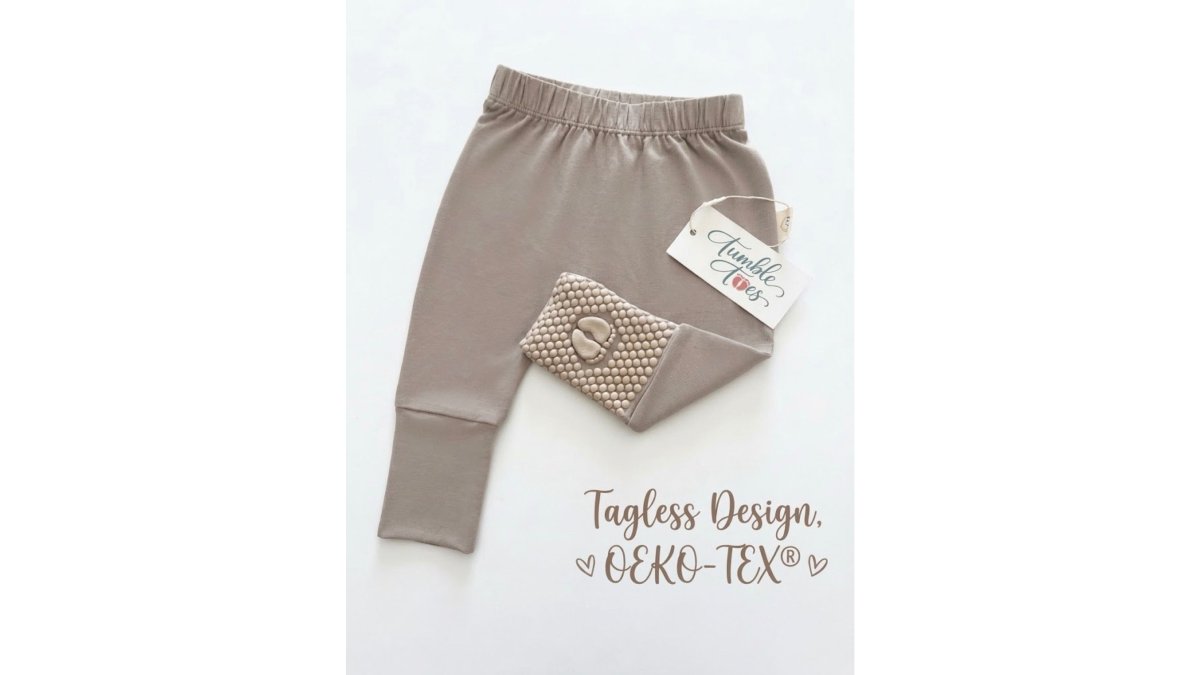
At TUMBLE TOES SHOP, we built our convertible grip footies around this certification because sensitive skin reacts to what touches it all day.

How the Testing Process Works
Manufacturers submit fabric, thread, and trim samples to an accredited lab. The lab screens them for toxic chemicals, heavy metals, formaldehyde, and residual pesticides, then compares results against the standard's limits.
Certification is renewed annually, and the testing covers the finished garment rather than raw fiber alone. That matters because synthetic dyes and chemical additives introduced during finishing can reintroduce risk after clean fiber leaves the mill.
Product Classes: Why Class I Matters for Babies
The standard splits products into four classes based on skin contact. Class I is the strictest and applies to items for babies and toddlers up to age three (OEKO-TEX® STANDARD 100). It carries the tightest limits on formaldehyde, heavy metals, and allergen-causing dyes.
If a label shows Class I, the garment cleared the toughest threshold in the system. If it shows Class II, it was tested to a less demanding standard meant for adults.
Is OEKO-TEX Safe for Babies With Sensitive Skin?
Yes. OEKO-TEX certification is one of the more reliable signals that a garment is low-risk for infant skin sensitivity, because it tests for the substances most likely to trigger irritation.
Infant skin is thinner and absorbs more than adult skin, so chemical residues that a parent would never notice can cause a reaction on a baby. The certification targets exactly those residues.
Harmful Substances Tested and What They Mean for Infant Skin
The testing list reads like a catalog of things you would never knowingly put on a baby:
- Formaldehyde, used in some wrinkle-resistant finishes, is a known skin and respiratory irritant
- Heavy metals such as lead and cadmium can accumulate with repeated exposure
- Residual pesticides from conventional cotton farming can linger in fiber
- Phthalates in some printed designs can disrupt normal skin barrier function
- Synthetic dyes with certain azo compounds can trigger contact dermatitis
A garment that passes Class I testing keeps these at or below strict limits. For a baby with eczema-prone or reactive skin, that is a meaningful difference, not a marketing line.
OEKO-TEX vs. GOTS Baby Clothes: Key Differences Parents Should Know
The two certifications answer different questions, and understanding which question each one answers is what stops parents from overpaying for the wrong assurance.
OEKO-TEX Standard 100 asks: is this finished textile free of harmful substances at the levels a baby's skin can tolerate? GOTS (Global Organic Textile Standard) asks: is the entire supply chain organic and socially responsible, from the farm through processing and finishing?
| Feature | OEKO-TEX Standard 100 | GOTS |
|---|---|---|
| Primary focus | Chemical safety of the finished textile | Organic fiber plus processing and social standards |
| Organic fiber required | No | Yes |
| Social criteria (labor, wages) | No | Yes |
| Baby-specific class | Class I (under age 3) | Organic content thresholds by product weight |
| Tests the finished garment | Yes | Yes, plus fiber origin |
| Best for | Any textile safety check | Organic cotton assurance |
The Practical Difference for a Parent
GOTS already requires chemical testing as part of its processing criteria, so a GOTS-certified garment generally clears a high chemical-safety bar on its own. The reverse is not true: an OEKO-TEX Standard 100 garment can be made from conventional, non-organic cotton and still pass, because Standard 100 tests what is in the finished textile, not how the fiber was grown.
That means the two certifications are not competitors. They are layers. A garment can hold both, and many premium baby brands pursue both because they answer separate concerns, one about what is on the fabric, the other about how the fabric came to exist.
Where the Confusion Costs Parents Money
A brand can claim "organic cotton" without holding GOTS, and it can claim "tested for harmful substances" without holding OEKO-TEX. Neither claim is illegal, and neither is verifiable on its own. The certification mark plus a certificate number is what makes either claim checkable.
If your priority is chemical safety against your baby's skin, the concern for eczema-prone or reactive skin, Standard 100 Class I speaks most directly to that. If your priority is organic fiber and ethical supply chain, GOTS is the stronger signal. If you want both, look for a garment carrying both marks, and verify each certificate number separately, because they are issued by different bodies and live in different databases.
How to Check OEKO-TEX Certification Before You Buy
Verification takes about two minutes and requires no special knowledge. Look for the label, find the certificate number, and confirm it in the official database.
OEKO-TEX label ID verification tool
Reading the Label and Certificate Number
The label shows the certification mark, a product class, and a certificate number. Class I is what you want for babies. Enter the number on the certifier's site and confirm the product category matches what you are holding.
- Certification mark is printed on the garment or packaging
- Product class is listed as Class I
- Certificate number is legible and complete
- Database lookup returns a valid, current result
What Certification Does Not Cover: Washing, Wear, and Supply Chain
Certification covers the product as it leaves the factory. It does not cover what happens after, and this is the part most guides skip.
Washing matters. Residues from scented detergent, fabric softener, and dryer sheets sit directly against skin and can undo the benefit of a certified garment. For sensitive skin, use a fragrance-free detergent and skip softeners.
Wear matters too. Fiber integrity changes over time, and a garment that pills or breaks down exposes rougher surfaces to skin. Supply chain transparency is the other gap: certification confirms testing happened, but it does not map every farm and mill. Buyers who want the full picture should look for brands that publish where their materials come from.
Is Certified Baby Clothing Worth the Higher Price?
For families managing eczema or reactive skin, yes. Certified OEKO-TEX baby clothing removes a variable you cannot otherwise control, and it typically costs more because independent testing and annual renewal are not free.
Our Convertible Grip Footies run $32.99 and carry OEKO-TEX Standard 100 certification. The fold-over foot covers convert from covered to open without an outfit change, which cuts down on the constant changing that irritates already-sensitive skin. Grip traction on the foot covers helps with early standing and toddling.
Where it falls short: this is not a budget option, and a family with no skin concerns may not need the extra assurance. For everyone else, the cost buys a tested garment instead of an untested claim.
Conclusion: Making a Confident Choice for Your Baby's Skin
The gap between a certified garment and a hopeful label is a certificate number you can look up. That single check tells you whether a product was tested to Class I limits or just printed with a familiar logo.
If your baby has sensitive skin, start there. Our OEKO-TEX Standard 100 certified footies, the fold-over design that skips outfit changes, and the veteran-owned craftsmanship behind every pair are built for exactly this. Shop all products and give your little one clothing that was tested, not just marketed.
Frequently Asked Questions
Is OEKO-TEX good for babies?
Yes. OEKO-TEX Standard 100 sets limits on harmful substances in textiles, and Class I is the strictest level, designed specifically for items that touch a baby's skin. Certified baby clothing is tested for heavy metals, formaldehyde, residual pesticides, and other chemical residues. For parents of infants with sensitive skin or eczema, choosing OEKO-TEX Standard 100 baby clothes reduces exposure to substances that can trigger irritation, making it a practical safety step rather than just a marketing label.
What's better, OEKO-TEX or GOTS?
They measure different things. GOTS certifies the entire organic textile supply chain, from fiber to finished garment, and includes social and environmental criteria. OEKO-TEX Standard 100 tests the finished garment for harmful substances, regardless of whether the fiber is organic. A garment can carry both. If organic fiber is your priority, look for GOTS. If your concern is chemical residues touching your baby's skin, OEKO-TEX Standard 100 covers that directly. Many parents choose products with both certifications.
How can I verify an OEKO-TEX certificate for baby clothing?
Look for the OEKO-TEX label on the garment or packaging. It includes a certificate number and the testing institute. You can enter that certificate number on the official OEKO-TEX website to confirm it is valid and see which product class it covers. Check that the label specifies Class I, which is the level required for baby items. If a brand claims certification but cannot provide a verifiable certificate number, treat the claim with caution.
Does OEKO-TEX certification mean baby clothes are organic?
No. OEKO-TEX Standard 100 tests for harmful substances in the finished garment. It does not certify that the cotton or other fibers are organically grown. A garment made from conventional cotton can still pass OEKO-TEX testing if it meets the chemical limits. If organic fiber matters to you, look for GOTS or another organic fiber certification in addition to OEKO-TEX. The two certifications address different parts of the supply chain.
What should I look for when buying certified baby clothes?
Check three things: the certification type (OEKO-TEX Standard 100), the product class (Class I for baby items), and a verifiable certificate number. Also consider fabric softness, seam construction, and whether the design works for your daily routine. Convertible footies with fold-over covers, like those from Tumble Toes Shop, combine OEKO-TEX Standard 100 certification with practical features that reduce outfit changes. Confirm sizing against the brand's size chart before ordering.
Does washing affect OEKO-TEX certification?
The certification applies to the product as manufactured and tested. Washing does not remove the certification, but it can affect the fabric over time depending on detergent and water temperature. Use a gentle, fragrance-free detergent and follow the care label to preserve fiber integrity and softness. Avoid fabric softeners and chlorine bleach, which can leave residues on the fabric that defeat the purpose of choosing certified clothing for sensitive skin.