

Convertible Baby Footies for Toddlers: 2026 Buying Guide
Table of Contents
- Why Convertible Baby Footies for Toddlers Beat One-Piece Sleepers
- How Fold-Over Footie Pajamas Actually Work (and Whether They Stay Put)
- Best Fabric for Baby Grip Footie Pajamas: Bamboo, Cotton, or a Blend
- Footed Pajamas vs. Convertible Footies: Which Wins for Active Toddlers
- Grip-Foot Sleepers for Toddlers: What Changes After the First Steps
- Sizing, Safety, and Cost Per Wear: What to Check Before You Buy
- Common Mistakes Parents Make With Convertible Baby Footies
- Conclusion: Choosing Convertible Footies That Earn Their Keep
- Frequently Asked Questions
Last Updated: October 14, 2026
Why Convertible Baby Footies for Toddlers Beat One-Piece Sleepers
Convertible baby footies for toddlers are one-piece garments with foot covers that fold back, turning a footed sleeper into a footless romper in seconds. That solves the biggest problem with traditional one-piece sleepers: they stop working the moment your child starts moving differently.
Here at Tumble Toes Shop, we built our signature convertible grip footies around that exact problem.

The 2026 buying landscape has more convertible options than ever, and they are not all built the same. Below, we break down how fold-over feet work, which fabrics hold up, and what to check before you buy.
How Fold-Over Footie Pajamas Actually Work (and Whether They Stay Put)
Fold-over footie pajamas work through a simple flap: the foot cover folds over the toes and secures with a snap or a stitched fold, then flips back to expose bare feet. Whether it stays put is where quality separates.
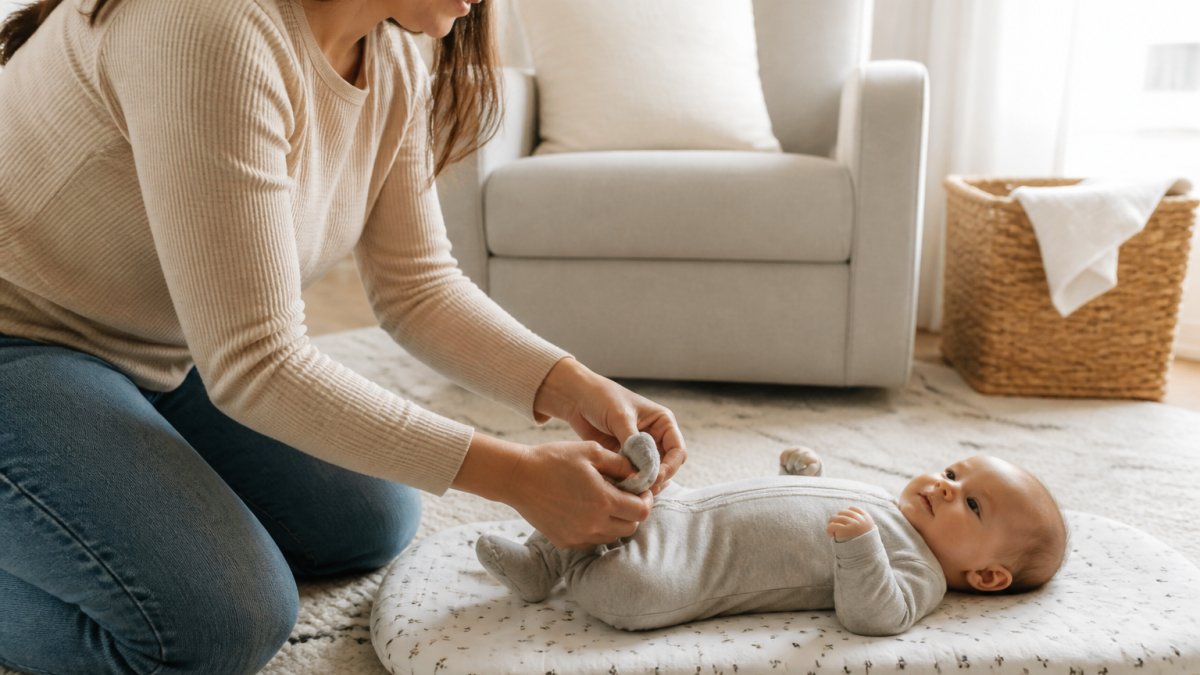
The skepticism is fair: parents have watched flaps slip, bunch, or pop open mid-crawl. Staying power comes down to two things, the weight of the fabric at the fold and how the closure is finished.
A few practical checks before you buy:
- Look for a reinforced fold line, not a loose hem that will fray after a few washes
- Check whether the closure is a snap, a stitched tuck, or nothing at all
- Feel the fabric at the fold; a flimsy single layer will not hold a crease
- Confirm the grip texture sits on the outside of the foot cover, where it actually contacts the floor
Best Fabric for Baby Grip Footie Pajamas: Bamboo, Cotton, or a Blend
The best fabric for baby grip footie pajamas depends on your priority: bamboo-derived viscose wins on softness and temperature comfort, cotton wins on durability and price predictability, and blends split the difference.
Here is the trade-off most product pages skip.
Cotton is the workhorse: breathable, holds its shape through repeated hot-water washing better than bamboo-derived viscose, and the most predictable fiber to shop for.
Blends, usually cotton with a small percentage of spandex or elastane, land in the middle: more shape than pure bamboo-derived viscose, softer than plain cotton, and better through a normal wash cycle than either extreme.
| Fabric | Feel | Breathability | Durability | Care Reality | Best For |
|---|---|---|---|---|---|
| Bamboo-derived viscose | Silky-soft, high stretch | High | Moderate; pills and snags under friction | Cold wash, low or no heat dry | Sensitive skin, warm sleepers |
| Cotton (interlock or jersey) | Soft, more structured | High | High; tolerates warm wash | Normal wash, medium dry | Everyday wear, frequent laundering |
| Cotton blend with stretch fiber | Soft with give | Moderate to high | High; holds shape well | Normal wash, low dry | Growing toddlers, all-round use |
A few practical notes that do not show up in most descriptions:
- Stretch recovery matters more than stretch. A fabric that stretches but does not snap back will sag at the knees and ankles by mid-season. Cotton-spandex blends and bamboo lyocell tend to recover better than loosely knit bamboo jersey.
- Weight, not just fiber, drives warmth. A heavier bamboo-derived viscose can sleep warmer than a lighter cotton, so read the fabric weight or GSM if the brand publishes it.
- Finish and certification are separate from fiber. A garment can be made of organic cotton and still carry dye or finish residues that bother reactive skin.
Fabric alone does not tell you whether a garment is safe for reactive skin. Certification does. OEKO-TEX Standard 100 explained sets limits on harmful substances in textiles and applies to the finished garment, not just the raw fiber, which is why it is a more useful signal than a "hypoallergenic" tag.
Footed Pajamas vs. Convertible Footies: Which Wins for Active Toddlers
Convertible footies win for active toddlers, and it is not close. Once a child is pulling up, cruising, or walking, a fixed footed pajama becomes a liability on hard floors.
A traditional footed sleeper does one job: sleep. A convertible footie does two: sleep and play. For a toddler who is constantly moving, that second job saves you a mid-morning outfit change.
Consider the daily reality:
- Diaper changes: A full-length, two-way zip lets you open from the bottom without exposing the chest, which matters in a cold room.
- Floor time: Covered toes keep feet warm; folded-back feet give traction and grip for early walkers.
- Growth: A stretchy one-piece sleeper with fold-over cuffs at the hands and feet lasts longer than a set that has to fit perfectly at every seam.
Grip-Foot Sleepers for Toddlers: What Changes After the First Steps
Grip-foot sleepers for toddlers add textured traction to the sole, and that matters more after the first steps than before them.
This is the stage where most parents notice a problem. Slick footed pajamas plus a smooth floor equals slips, and slips at this age mean bumps and tears.
What changes after the first steps:
- Traction becomes a safety feature, not a nicety
- Footless mode becomes the default during waking hours
- Fit at the ankle matters more, because a loose cuff trips a new walker
- You start caring about how the garment handles a real stride, not just a lie-down
Our convertible grip footies put textured grip on the foot covers themselves, so traction is there whether the cover is up or down. That is a small design choice with a big payoff at this stage.
Sizing, Safety, and Cost Per Wear: What to Check Before You Buy
Sizing and safety checks matter more than any single feature, and cost per wear is the honest way to judge whether a higher price is worth it.
Toddler sizing: measure, do not trust the age label
Age labels vary widely between brands, and a toddler at 18 months can sit anywhere between two sizes depending on height and build. Instead:
- Measure height first. Lay the child against a wall or use a tape from heel to crown. Height, not weight, is the primary driver of one-piece fit.
- Measure torso length from the base of the neck to the crotch. This is where a one-piece either fits or fights, a long torso will pull the shoulders down and shorten the foot cover.
- Measure foot length from heel to longest toe. The foot cover needs roughly a half-inch of room past the toe, no more, or the fold will not sit flat.
- Check the size chart's stretch note. If the brand lists a height range, aim for the middle of the range rather than the top, so the stretch is working with you, not against you.
Parents often buy up a size "to grow into," but that backfires on a one-piece: an oversized footie bunches at the ankles, drags under the heel, and trips a new walker. Buy for current height and let the fabric's stretch provide the growing room.
Safety checks for toddler sleepwear
- Snug fit is the goal. Loose sleepwear is a known burn risk, which is why CPSC guidance on children's sleepwear treats fit as a safety issue, not a comfort preference. A garment that hangs away from the body is the one to avoid.
- Inspect closures before every wash cycle. Loose snaps, frayed threads, or a fold that has lost its crease can come free in a small hand. Tug each closure once a week.
- Skip drawstrings and long ties entirely. They are a strangulation and snag hazard on a moving toddler.
- Confirm the finished garment has been tested for harmful substances if your child has reactive skin. Certification applies to the finished piece, not just the fiber.
- Follow the care label. Heat damage can shrink fabric and stiffen a fold, which turns a convertible footie into a fixed one.
Cost per wear: the math that actually decides value
Cost per wear is simple: divide the price by the wears you realistically get before the garment is outgrown, worn out, or retired.
A worked example using round numbers:
- A $32.99 footie worn three times a week for a 16-week season is about 48 wears, or roughly $0.69 per wear.
- A $14.99 footie that pills after five washes and gets retired at week six is about 18 wears, or roughly $0.83 per wear.
The cheaper garment costs more per use, the whole argument for buying fewer, better pieces, and why a convertible design can pay for itself if it replaces a separate sleep sack, play romper, or mid-day outfit change.
Common Mistakes Parents Make With Convertible Baby Footies
The most common mistakes with convertible baby footies are buying on price alone, ignoring the closure design, and treating certification claims as interchangeable.
One mistake is assuming all fold-over feet are built the same.
Another is washing on hot and drying on high, which turns soft bamboo into pilled, stiff fabric and shrinks the stretch out of a blend.
The third is paying for the word "organic" without checking what it actually certifies. FTC guidance on environmental marketing claims requires brands to back up claims like "organic" and "eco-friendly" with evidence.
Conclusion: Choosing Convertible Footies That Earn Their Keep
Toddlers grow fast, move constantly, and outlast cheap clothing. A convertible footie earns its keep when it fits well, holds its fold, and survives the wash cycle long enough to justify the price.
At Tumble Toes Shop, our convertible grip footies are built for exactly that. They feature fold-over foot covers that switch from covered to bare in seconds, grip traction for early walkers, and OEKO-TEX® Standard 100 certified materials tested for harmful substances. We are also proudly veteran-owned and operated.
Shop all products at Tumble Toes Shop and give your toddler one piece that works as hard as they do.
Frequently Asked Questions
What are convertible baby footies, and how do they differ from regular footed pajamas?
Convertible baby footies are one-piece sleepers with fold-over foot covers you can flip open or closed whenever you need. Regular footed pajamas have a permanently enclosed foot. The convertible design lets the same garment work as a footed sleeper for naps and a footless romper for crawling, walking, or play. That flexibility means fewer outfit changes during the day and a longer useful life as your toddler grows.
Are convertible footies good for toddlers who are learning to walk?
Yes. Once a toddler starts pulling up and cruising, bare or grip-covered feet give better traction than smooth enclosed fabric. Fold the foot covers open so toes can grip the floor, or leave them closed with the textured grip side down for cold floors. Look for grip-foot sleepers with textured soles, like Tumble Toes Co. Convertible Grip Footies, which combine fold-over feet with grip traction in one piece.
What is the best fabric for baby grip footie pajamas?
Bamboo viscose and cotton blends are the most common choices because they feel soft, stretch with movement, and breathe well during sleep. For sensitive or eczema-prone skin, look for OEKO-TEX Standard 100 certification, which means the textile has been tested for harmful substances. Tumble Toes Co. Convertible Grip Footies use materials with this certification, so you get softness and a verifiable safety standard in the same garment.
How should toddler footie pajamas fit, and when should you size up?
Footies should hug the body without pulling at the shoulders or bunching at the ankles. Check the brand's size chart before ordering; Tumble Toes Co. lists length by size (15 inches at 3-6M up to 18 inches at 18M), so measure your child's height and match it. Size up when the fabric pulls tight across the chest or the foot covers won't fold flat.