

Does OEKO-TEX Matter for Baby Clothes? A Parent's Guide
Last Updated: October 19, 2026
Does OEKO-TEX Matter for Baby Clothes?
Yes. OEKO-TEX baby clothes are certified through a textile standard that tests finished garments for harmful substances, testing that matters more for newborns and toddlers, whose skin is thin and still developing.
What Does OEKO-TEX Standard 100 Test For?
OEKO-TEX Standard 100 tests finished textile products for harmful substances like formaldehyde, heavy metals, and certain dyes. The key word is finished product: testing happens on the garment itself, not just the raw fiber.
OEKO-TEX vs. Organic Cotton: What's the Difference?
OEKO-TEX and organic cotton answer two different questions.
| Label | What It Covers | Best For |
|---|---|---|
| OEKO-TEX Standard 100 | Harmful substance testing on the finished product | Chemical safety and skin contact |
| GOTS (organic) | Organic fiber, environmental criteria, social criteria | Sustainable and organic sourcing |
| Both together | Fiber sourcing plus finished-product safety | Parents who want the full picture |
If your main worry is skin irritation and chemical exposure, prioritize OEKO-TEX baby clothes.
How to Verify OEKO-TEX Certification
Every certified product carries a certificate number you can check against the issuing body's database. Find the label, locate the certificate number, confirm the product class matches baby items, check that it covers the finished product, and verify it is current.
What Standard 100 Does and Does Not Test
Standard 100 tests for harmful substances. It does not test for comfort, durability, fit, or allergens the way a medical test would.
Baby Clothes for Sensitive Skin: Why Certification Helps
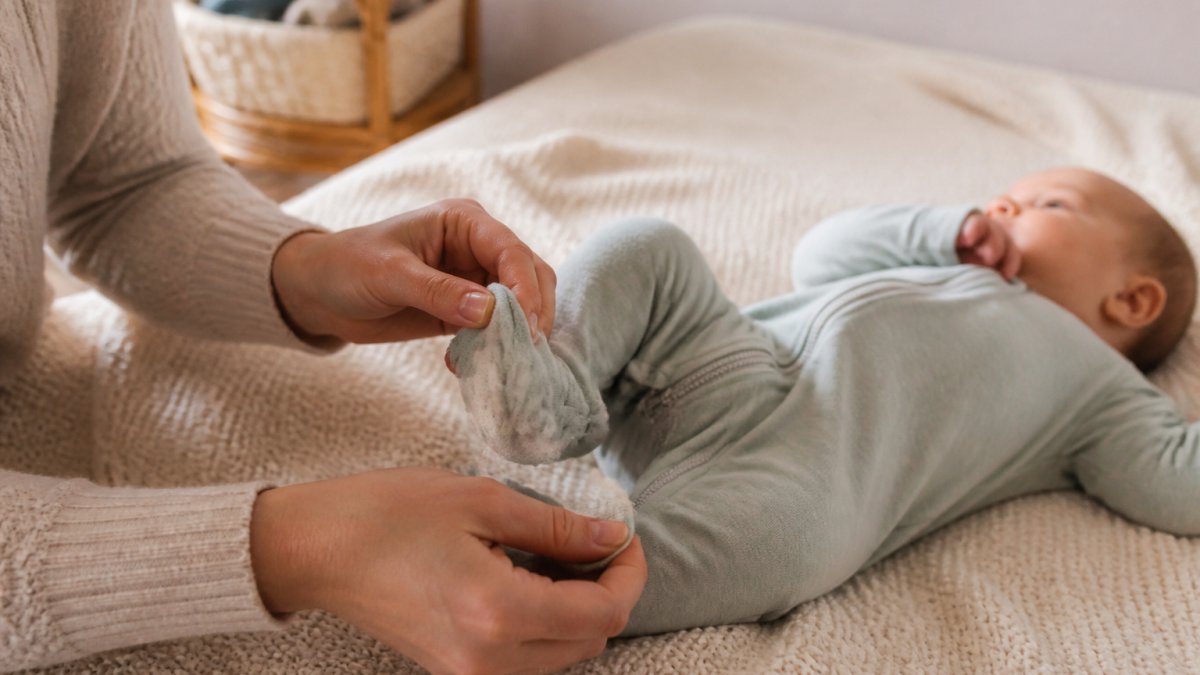
Skin irritation in infants often traces back to friction, moisture, or chemical residue in fabric. Our convertible grip footies carry the OEKO-TEX Standard 100 certification on the supplied materials, with fold-over foot covers that mean less handling and less friction.

Care, Washing, and Certification After Purchase
Certification does not expire when you take the tags off, but how you wash a garment affects what touches your baby's skin.
A Decision Framework for Parents
If your baby has diagnosed eczema or reacts to fabrics: prioritize certified garments to lower exposure to known chemical irritants. If your baby has no skin issues: certification is a reasonable baseline, but fit and comfort may matter more. If budget is tight: buy fewer certified items and focus on those that sit directly against skin, like footies and bodysuits.