

How Do You Choose Clothes for Sensitive Skin?
Last Updated: October 27, 2026
Start With the Best Fabrics for Sensitive Skin
Choosing sensitive skin clothes starts with fabric, not brand names. Cotton and bamboo top the list because both breathe well and feel soft against reactive skin.
The best fabrics for sensitive skin: cotton, bamboo, linen, silk, Lyocell and modal, and merino wool (patch-test first).
Natural versus synthetic isn't a simple contest: some synthetics trap sweat and heat, but natural fibers with harsh dyes or stiff finishes can bother skin too.
For more, see our guide to eczema-friendly fabrics and what OEKO-TEX means for baby clothes.
Baby Clothes for Eczema: Features That Reduce Irritation
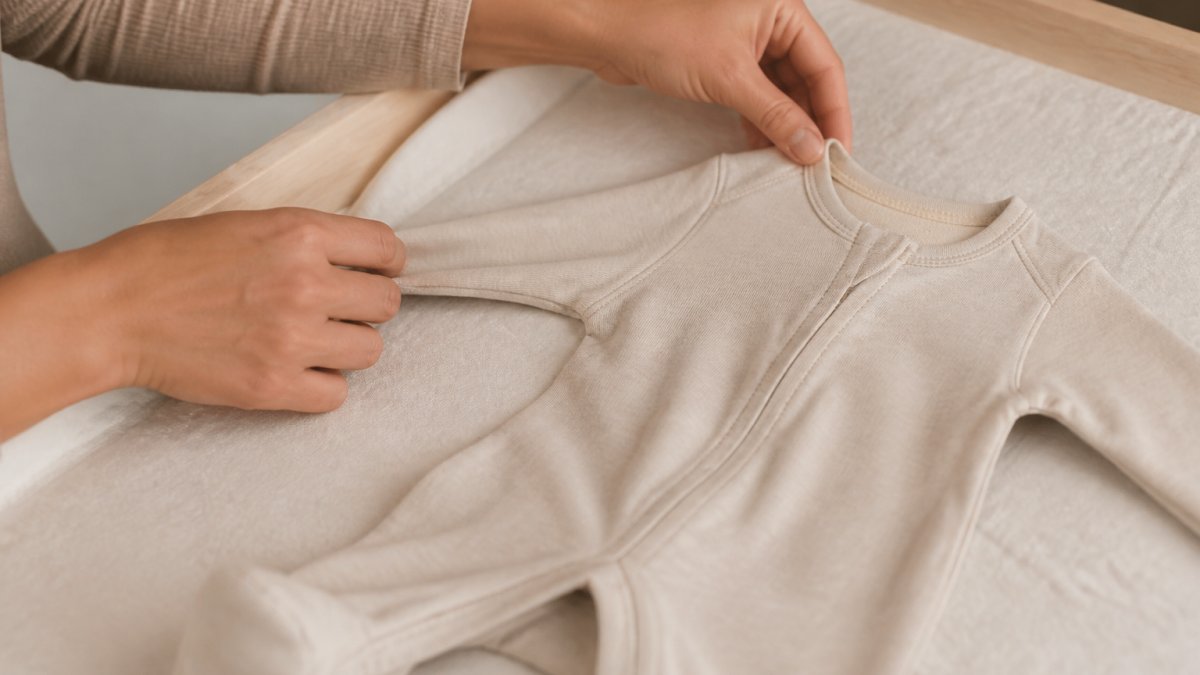
Baby clothes for eczema should have flat seams, tag-free necklines, loose fits, and soft fold-over cuffs.
Our convertible grip footies use fold-over foot covers to protect little toes; our guide to fold-over feet explains how they stay put.
Itchy Fabrics to Avoid and How to Wash Baby Clothes for Sensitive Skin
For foot comfort, see our guide on non-slip socks for babies learning to walk.
| Problem | Fix | Why It Helps |
|---|---|---|
| Scratchy tags | Choose tagless designs | Removes friction at the neck |
| Stiff seams | Pick flat seams | Reduces chafing |
| Sweat buildup | Use breathable fabric | Keeps skin drier |
| Detergent residue | Extra rinse cycle | Removes irritants |
| Tight fit | Choose loose cuts | Allows airflow |
Choosing clothes for a little one with sensitive skin takes some trial and error, and every child reacts differently. TUMBLE TOES SHOP makes it simpler with OEKO-TEX® Standard 100 certified baby clothing, tag-free designs, and convertible grip footies with fold-over covers that protect skin without constant outfit changes. Start with soft fabrics, check the seams, and wash smart. Get started with TUMBLE TOES SHOP and give your baby comfortable, skin-friendly clothing from day one.
